Iron-Rich Foods for Women: Indian Vegetarian Sources
Why women need more iron, signs of deficiency, the best Indian vegetarian iron-rich foods, tips to absorb more iron, a sample day plan and when to get tested.
By Nitya Health Editorial Team8 min read
Feeling tired all the time, breathless on the stairs or noticing more hair fall than usual? Low iron is one of the most common reasons — especially for Indian women. In the National Family Health Survey (NFHS-5, 2019–21), more than half of women aged 15–49 in India were found to be anaemic, and iron deficiency is a leading cause.
The good news is that a well-planned vegetarian Indian diet can provide plenty of iron. The trick lies not only in what you eat, but in how you combine foods so your body actually absorbs the iron. This guide explains why women need more iron, the signs of deficiency, the best vegetarian sources and practical tips to absorb more.
Why women need more iron
Iron is needed to make haemoglobin, the protein in red blood cells that carries oxygen from your lungs to the rest of your body. When iron runs low, your body makes less haemoglobin, and your organs and muscles get less oxygen.
Women need more iron than men for several reasons:
- Monthly periods: every period means some blood — and iron — loss. Heavy or long periods increase this loss significantly. Understanding your menstrual cycle phases can help you notice patterns.
- Pregnancy: the growing baby and placenta, and the increase in blood volume, raise iron needs sharply.
- Breastfeeding and closely spaced pregnancies can deplete iron stores.
- Vegetarian diets contain only non-haem iron, which the body absorbs less efficiently than the haem iron in meat and fish.
How much iron do you need?
According to the ICMR-NIN Recommended Dietary Allowances (2020):
| Group | Iron RDA per day |
|---|---|
| Adult women | 29 mg |
| Pregnant women | 27 mg |
| Breastfeeding women | 23 mg |
| Adult men (for comparison) | 19 mg |
These values already account for the lower absorption of iron from typical Indian vegetarian diets. Teenage girls also have high needs because they are growing and have started menstruating. During pregnancy, doctors usually prescribe iron-folic acid (IFA) tablets as well, because diet alone is rarely enough.
Signs of iron deficiency
Iron deficiency develops slowly, and early on you may notice nothing at all. As it progresses into iron-deficiency anaemia, common signs include:
- Constant tiredness, weakness or low stamina
- Pale skin, pale inner eyelids or pale nail beds
- Breathlessness or a racing heart on mild exertion
- Headaches, dizziness or poor concentration
- Hair fall, and brittle or spoon-shaped nails
- Cold hands and feet
- Cravings for ice, raw rice, chalk or mud (called pica)
- Restless legs, especially at night
- Frequent infections
Many of these symptoms overlap with other conditions such as thyroid problems or vitamin B12 deficiency, so a blood test is the only way to know for sure.
Best iron-rich vegetarian Indian foods
Values are approximate and can vary widely by variety, soil and cooking method (for example, food cooked in iron vessels picks up extra iron).
| Food | Iron per 100 g (approx.) | Typical serving | Iron per serving (approx.) |
|---|---|---|---|
| Garden cress seeds (halim / aliv) | Very high; reported values vary widely | 1 tsp (5 g) | Varies; a useful boost |
| Sesame seeds (til) | 14 mg | 1 tbsp (10 g) | 1.4 mg |
| Soya chunks (dry) | 10 mg | 30 g | 3 mg |
| Pumpkin seeds | 9 mg | 1 tbsp (10 g) | 0.9 mg |
| Masoor dal (raw) | 7 mg | 30 g raw (1 katori cooked) | 2 mg |
| Rajma (raw) | 7 mg | 40 g raw (1 katori cooked) | 2.8 mg |
| Kala chana (raw) | 6 mg | 40 g raw (1 katori cooked) | 2.4 mg |
| Bajra (pearl millet) | 6 mg | 40 g flour (1 roti) | 2.4 mg |
| Ragi (finger millet) | 4 mg | 30 g flour | 1.2 mg |
| Tofu | 3–5 mg | 100 g | 3–5 mg |
| Spinach (palak), cooked | 3.5 mg | 1 katori (150 g) | 5 mg (poorly absorbed) |
| Amaranth leaves (chaulai), cooked | 2–3 mg | 1 katori (150 g) | 3–4 mg |
| Jaggery (gur) | Varies widely | 10 g piece | Small amount |
Green leafy vegetables
Palak, methi, chaulai, sarson, bathua, drumstick (moringa) leaves and radish greens all provide iron, along with folate and vitamin K. Spinach is famous for iron, but its oxalates reduce absorption — so eat a variety of greens rather than relying on palak alone.
Pulses and legumes
Rajma, kala chana, kabuli chana, masoor, moong, lobia and soya are reliable everyday sources that also give you protein and fibre. Our guide to soya chunks explains how to cook them well.
Millets
Bajra and ragi are richer in iron than polished rice or refined flour. Swapping a few rotis a week for bajra or ragi roti, or having ragi malt, adds up.
Seeds and nuts
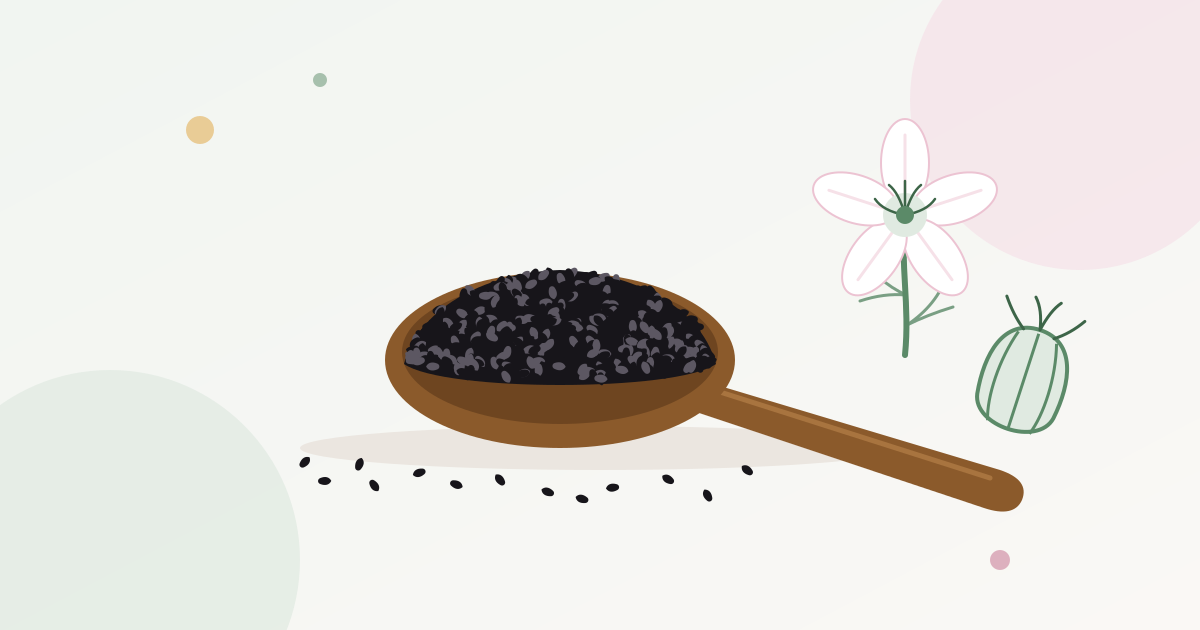
Garden cress seeds are a traditional favourite for new mothers in many Indian homes, often made into laddoos. Sesame, pumpkin and flax seeds, cashews and almonds also contribute.
A note on popular myths
- Dates and raisins are healthy, but contain only modest iron (around 1–2 mg per 100 g). They are a helpful extra, not a fix for anaemia.
- Beetroot is often recommended for “increasing blood”, but it is actually low in iron. Its red colour comes from pigments, not iron.
- Jaggery contains some iron, but amounts vary greatly, and it is still a form of sugar.
How to absorb more iron from vegetarian food
Plant iron is absorbed less efficiently than iron from meat, but simple habits can make a big difference.
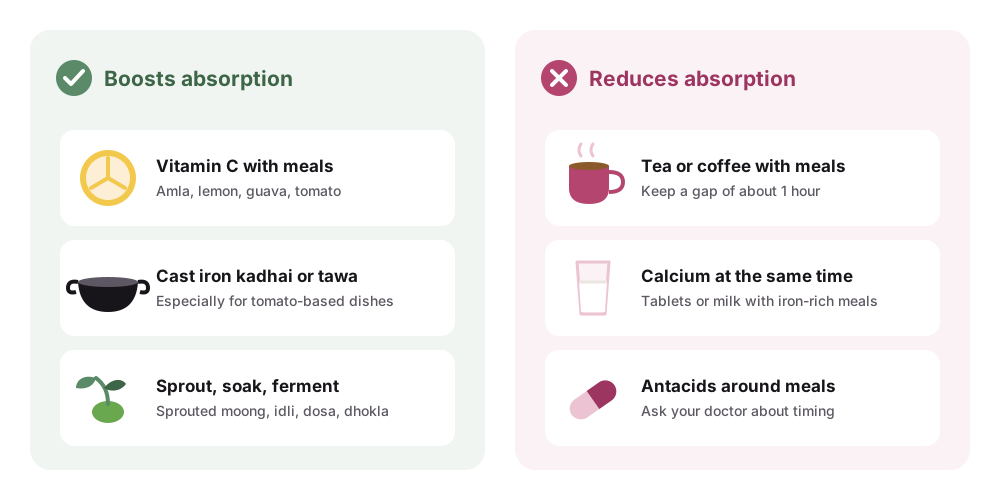
Do
- Add vitamin C to every iron-rich meal: a squeeze of lemon on dal, amla, guava, orange, tomato, capsicum or a side of kachumber salad.
- Cook in a cast iron kadhai or tawa, especially for acidic dishes like tomato-based sabzis. Small amounts of iron move into the food.
- Sprout, soak and ferment: sprouted moong, idli, dosa and dhokla have fewer phytates, which helps release more iron.
Don’t
- Drink tea or coffee with meals. Keep a gap of about an hour before and after.
- Take calcium supplements with iron-rich meals or iron tablets. Space them a few hours apart.
- Rely on one “superfood”. Variety across the day is more effective than one big serving of palak.
The simplest habit of all: add lemon or amla to your iron-rich meal, and move your chai to at least an hour later.
Sample iron-rich day plan (vegetarian)
This plan shows how to pair iron sources with vitamin C across a day. Portions should suit your appetite and any medical advice you have.
| Meal | What to eat | Iron source | Vitamin C partner |
|---|---|---|---|
| Early morning | Lemon water; 1 tsp soaked garden cress seeds or a til-gur laddoo | Halim seeds, sesame | Lemon |
| Breakfast | Ragi dosa or moong sprouts chilla with tomato chutney | Ragi, moong | Tomato |
| Mid-morning | 1 guava or orange + a few roasted pumpkin seeds | Pumpkin seeds | Guava / orange |
| Lunch | Bajra roti + rajma or chole + palak or methi sabzi + kachumber | Bajra, rajma, greens | Lemon, tomato, onion |
| Evening | Roasted chana with chopped onion, tomato and lemon | Chana | Lemon, tomato |
| Dinner | Masoor dal + soya-vegetable pulao, cooked in an iron kadhai | Masoor, soya | Capsicum, tomato |
Have your tea or coffee between meals rather than with them. If you want more ideas for building balanced vegetarian meals, see our vegetarian protein diet plan — many protein-rich foods are iron-rich too.
When to get tested
Food alone may not be enough to correct an existing deficiency. Ask your doctor for a blood test if you:
- Have symptoms like ongoing fatigue, breathlessness or paleness
- Have heavy periods — soaking a pad every 1–2 hours, passing large clots or bleeding for more than 7 days
- Are pregnant, planning a pregnancy or have recently given birth
- Follow a strict vegetarian or vegan diet and have never been tested
- Have digestive conditions that may affect absorption, such as coeliac disease
Common tests include a complete blood count (CBC), which shows your haemoglobin, and serum ferritin, which shows your iron stores. For non-pregnant women, haemoglobin below 12 g/dL is generally considered anaemia.
Tracking your period flow, cycle length and symptoms in an app like Nitya Health can make it easier to describe heavy bleeding or fatigue patterns to your doctor.
Who should be careful
- Do not start high-dose iron tablets on your own. Your doctor will decide the dose and duration based on your test results. Iron tablets can cause constipation, nausea or dark stools, and too much iron can be harmful.
- Keep iron supplements away from children — accidental overdose can be dangerous.
- If you have thalassaemia trait or another blood condition, extra iron may not be appropriate; always check with your doctor.
- Heavy periods themselves need attention. Treating only the anaemia without finding the cause — such as fibroids, thyroid problems or hormonal issues — means it is likely to return. Speak to a gynaecologist.
Government health centres provide iron-folic acid tablets for women and girls under the Anaemia Mukt Bharat programme, so ask at your nearest centre if cost is a concern.
Frequently asked questions
How much iron does a woman need per day?
Indian guidelines from ICMR-NIN (2020) set the recommended dietary allowance for adult women at about 29 mg of iron a day, compared with 19 mg for men. Needs are higher because of iron lost during periods.
Which Indian vegetarian food is highest in iron?
Garden cress seeds (halim), sesame seeds, soya chunks, pumpkin seeds, bajra, ragi and pulses like rajma, chana and masoor are among the richest vegetarian sources. Eating them with vitamin C helps your body absorb more.
Should I drink tea after meals if I am low in iron?
It is best to avoid tea and coffee for about an hour before and after iron-rich meals. Their tannins and polyphenols can significantly reduce how much plant iron you absorb.
Can I take iron tablets without a blood test?
It is better to get tested first. A blood test confirms whether you are actually low in iron, and your doctor can then choose the right dose and duration, since too much iron can cause side effects.
- #iron
- #anaemia
- #vegetarian diet
- #women's health
- #periods
Track it with Nitya Health
Log your cycle, symptoms and habits — and get answers from an AI health coach.