Irregular Periods: Causes, Symptoms and When to See a Doctor
What counts as an irregular period, common causes like PCOS, thyroid problems and stress, the tests a doctor may suggest and simple steps that can help.
By Nitya Health Editorial Team8 min read
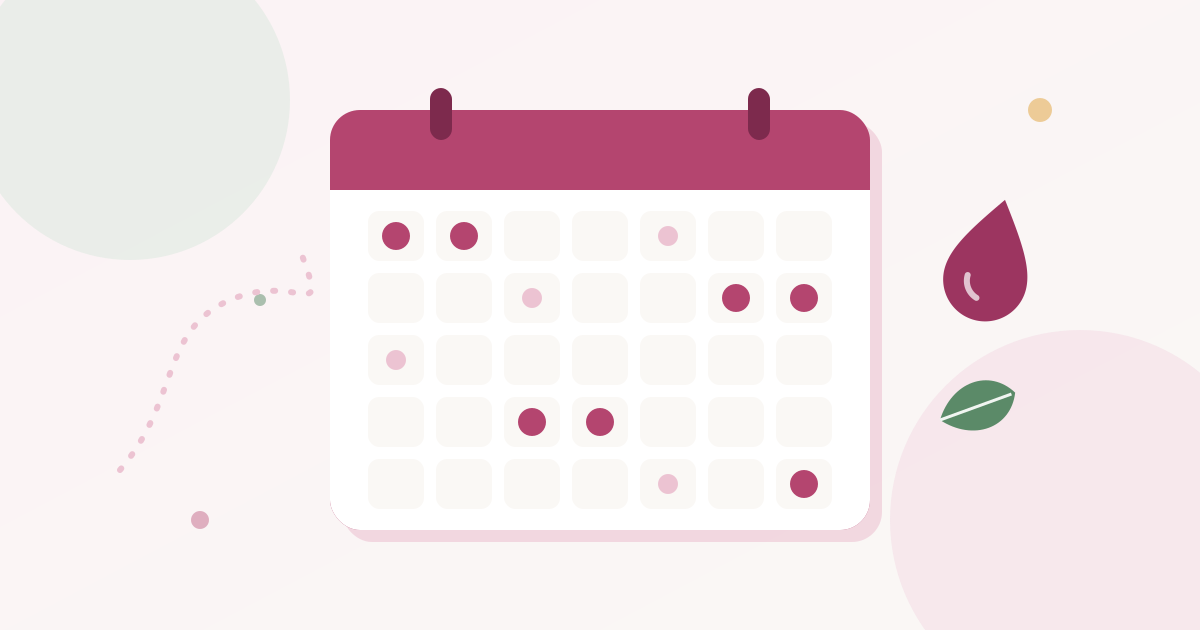
Most people’s periods are not perfectly regular. A cycle that is 28 days one month and 31 the next is completely normal. But when your period keeps arriving much earlier or later than expected, disappears for months, or feels impossible to predict, it is natural to wonder what is going on.
Irregular periods are very common, and in many cases the cause is temporary or easily managed. Sometimes, though, they are a sign of an underlying condition that is worth checking. This guide explains what counts as irregular, the most common causes, what your doctor may test for, and when to seek help.
What counts as an irregular period?
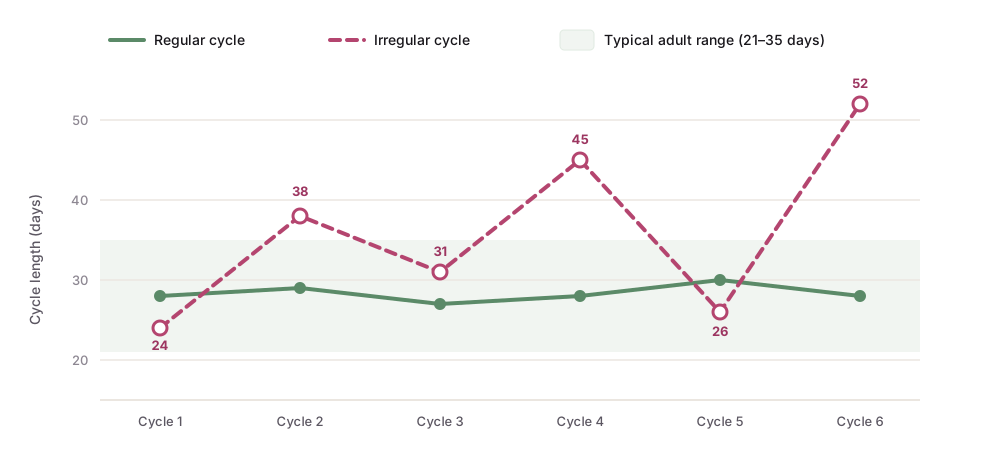
Your cycle is counted from the first day of one period to the day before the next. For adults, a cycle of 21 to 35 days is generally considered normal. Your periods may be described as irregular if:
- Your cycle length varies a lot — typically by more than 7 to 9 days between your shortest and longest cycles
- Your cycles are regularly shorter than 21 days or longer than 35 days
- You miss periods for one or more months (and are not pregnant)
- Your bleeding pattern changes noticeably — for example, much heavier or lighter than usual, or bleeding between periods
Going three months or more without a period (or six months if your cycles were already irregular) is called amenorrhoea and should always be checked by a doctor.
Symptoms that may come with irregular periods
Depending on the cause, you might also notice:
- Acne, oily skin or extra hair on the face, chest or tummy
- Hair thinning on the scalp
- Weight gain or weight loss without a clear reason
- Tiredness, feeling unusually cold or hot, or a racing heart
- Milky discharge from the nipples
- Hot flushes or night sweats
- Heavy, painful or prolonged bleeding
These clues can help your doctor narrow down the cause, so it is worth noting them down.
Common causes of irregular periods
Your cycle depends on a finely balanced chain of signals between the brain, the ovaries and other glands. Anything that disrupts this chain can change your cycle.
| Cause | How it can affect your periods | Other possible clues |
|---|---|---|
| PCOS (polycystic ovary syndrome) | Infrequent or absent ovulation, leading to long, unpredictable cycles | Acne, excess hair growth, weight gain, scalp hair thinning |
| Thyroid problems | Underactive thyroid can cause heavier or irregular periods; overactive thyroid can cause lighter or less frequent periods | Tiredness, weight change, feeling cold or hot, hair or skin changes |
| Stress | Can delay or stop ovulation, leading to late or missed periods | Poor sleep, anxiety, recent major life events |
| Weight change or extreme exercise | Low body weight, rapid weight loss or very intense training can switch off ovulation; higher weight can also affect cycles | Recent dieting, illness or a big change in training |
| High prolactin (hyperprolactinaemia) | Can suppress ovulation, causing irregular or absent periods | Milky nipple discharge, headaches |
| Perimenopause | Cycles become shorter, longer or skipped as ovarian function changes, usually in the 40s | Hot flushes, night sweats, sleep or mood changes |
| Puberty | Cycles can be irregular for a few years while hormones mature | Periods started recently |
| Hormonal contraception | Pills, injections, implants and hormonal IUDs can cause spotting, lighter or absent periods; cycles may take a few months to settle after stopping | Recent start, change or stop of contraception |
| Breastfeeding | Prolactin suppresses ovulation, so periods may be absent or irregular | Recent childbirth |
| Medications | Some antipsychotics, antidepressants, steroids and other medicines can affect cycles | Started a new medicine recently |
| Endometriosis or fibroids | More likely to cause heavy or painful periods, or bleeding between periods, than truly irregular cycles | Severe cramps, pain during sex, heavy bleeding |
Before looking for any other cause of a late or missed period, rule out pregnancy with a home test — even if you think it is unlikely.
A closer look at PCOS (PCOD or PMOS)
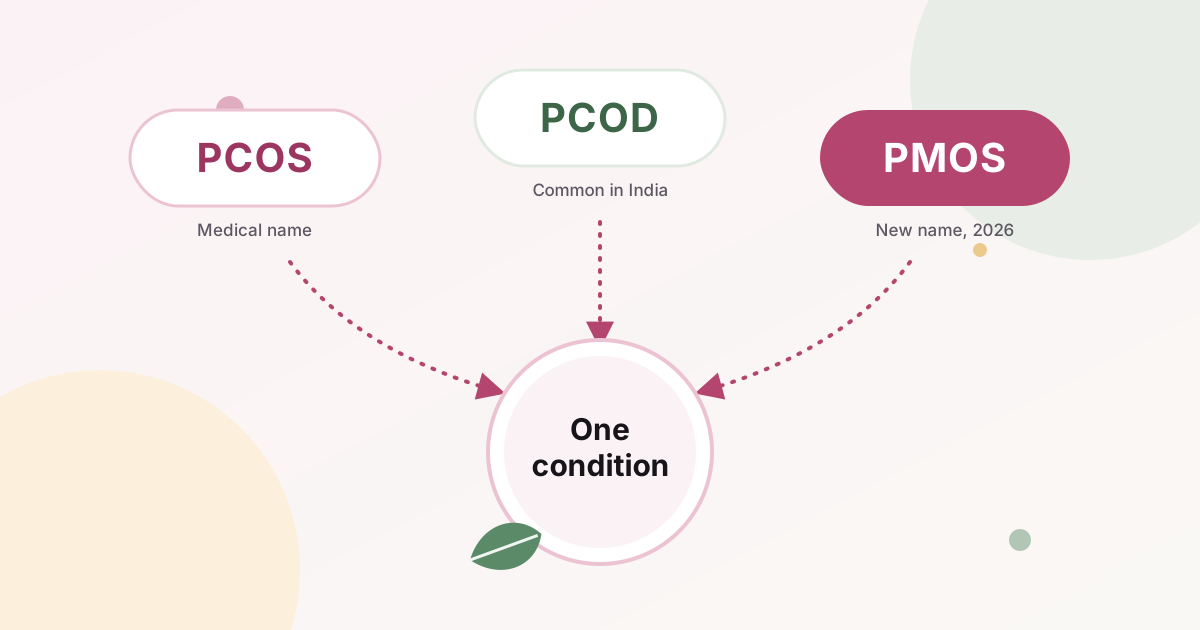
PCOS — also called PCOD in India, and recently renamed PMOS — is one of the most common hormonal conditions in women of reproductive age and a leading cause of irregular periods. It is linked to higher levels of androgens and often to insulin resistance. It is diagnosed by a doctor based on a combination of irregular ovulation, signs of high androgens and, sometimes, the appearance of the ovaries on ultrasound — not by a scan alone. Our guide to PCOS vs PCOD vs PMOS explains the names and the diagnosis in more detail. Lifestyle changes are often a first step in management; our PCOS diet chart with Indian foods has practical ideas.
How a doctor finds the cause
Your gynaecologist will usually start by asking about your periods, symptoms, weight, medicines, contraception and family history. Bringing a record of your last few cycles is very helpful. Depending on your situation, they may suggest some of these tests:
- Pregnancy test — urine or blood (beta-hCG)
- Thyroid function tests — usually TSH, sometimes with T3 and T4
- Prolactin levels
- Reproductive hormones — such as FSH, LH and estradiol, often timed to a particular day of your cycle
- Androgen levels, such as testosterone, if PCOS is suspected
- Blood sugar tests, such as fasting glucose or HbA1c, and sometimes insulin
- Complete blood count (CBC) to check for anaemia if bleeding is heavy
- Pelvic ultrasound — abdominal or transvaginal — to look at the uterus and ovaries
Why it is worth getting checked
Irregular periods are not dangerous in themselves, but finding the cause matters. Untreated thyroid problems can affect energy, weight, mood and heart health. Going for long stretches without a period — as can happen with PCOS — means the lining of the uterus is not shed regularly, and over time it can thicken. Doctors sometimes recommend treatment to protect the lining for this reason. And if you are hoping to conceive, understanding your ovulation early can save time and worry.
Irregular periods at different life stages
What counts as “normal” changes across your life:
- The teenage years: In the first few years after periods begin, cycles are often irregular because ovulation does not yet happen every month. This usually settles with time, but very heavy bleeding, or no periods for three months or more, should still be checked.
- After childbirth: Periods may stay away for months while breastfeeding, and the first few cycles afterwards are often unpredictable. You can still ovulate before your first period returns, so talk to your doctor about contraception.
- After stopping hormonal contraception: It can take a few months for your natural rhythm to return. If you have no period for three months after stopping, see your doctor.
- In your 40s: As you approach menopause, cycles may become shorter at first, then longer and further apart. Very heavy bleeding or bleeding between periods still needs a check-up, even at this stage.
Not everyone needs every test. Your doctor will choose what makes sense for your age, symptoms and plans for pregnancy.
Lifestyle steps that may help
Treatment depends on the cause, but these everyday habits support healthy hormone balance:
- Track your cycle. Logging period dates, flow and symptoms in an app like Nitya Health makes patterns easier to spot and gives your doctor clear information.
- Eat regular, balanced meals. Include protein, fibre, whole grains, vegetables and healthy fats. Avoid crash diets.
- Aim for a healthy weight for you. If you are overweight, even modest weight loss can help periods become more regular in some people, particularly with PCOS. If you are underweight, regaining weight is often key.
- Move regularly, but not to extremes. Moderate exercise most days is helpful; very intense training without enough food can stop periods.
- Prioritise sleep and keep a regular sleep routine.
- Manage stress with whatever works for you — walking, yoga, breathing exercises, time with friends or professional support.
- Check your iron intake if your periods are heavy. Dal, rajma, chana, green leafy vegetables and jaggery are good sources.
Medical treatment, when needed, might include hormonal medicines to regulate cycles, thyroid medication, treatment to lower prolactin, or medicines to help with ovulation if you are trying to conceive. Your doctor will explain the options for your situation.
When to see a doctor
Book an appointment with a gynaecologist if:
- You have not had a period for three months or more and are not pregnant
- Your cycles are consistently shorter than 21 days or longer than 35 days
- Your cycle length suddenly changes after being regular
- Your periods last more than 7 days, or you soak a pad or tampon every hour or two
- You have bleeding between periods, after sex or after menopause
- You have severe period pain that stops your daily activities
- You have symptoms like excess hair growth, severe acne, nipple discharge or unexplained weight changes
- Your periods have not started by age 15
- You are trying to conceive and your cycles are irregular
Seek urgent care if you have very heavy bleeding with dizziness or fainting, or severe abdominal pain — especially if there is any chance you could be pregnant.
Irregular periods can feel frustrating, but they are your body’s way of signalling that something has changed. In most cases, the cause can be found with a few simple tests, and there are effective ways to help your cycle find its rhythm again.
Frequently asked questions
Is it normal for my period to come a few days early or late?
Yes. A difference of a few days from one cycle to the next is normal. Cycles are usually considered irregular when the length varies by more than about 7 to 9 days, or falls outside the 21 to 35 day range.
Can stress make my period late?
Yes. Significant physical or emotional stress can affect the hormones that trigger ovulation, which can delay or even skip a period. Cycles often settle once the stress eases.
Do irregular periods mean I cannot get pregnant?
Not necessarily. Many people with irregular periods conceive naturally, but irregular cycles can make ovulation harder to predict. If you are trying to conceive, it is worth speaking to a gynaecologist early.
Are irregular periods normal in teenagers?
Yes, it is common for cycles to be irregular for the first few years after periods start, as hormones settle. Cycles between 21 and 45 days are generally considered normal in teenagers.
- #irregular periods
- #pcos
- #thyroid
- #hormones
- #menstrual cycle
Track it with Nitya Health
Log your cycle, symptoms and habits — and get answers from an AI health coach.