No Discharge, Just Itchy: Causes of Vaginal & Vulval Itching
Itching down there but no unusual discharge? Learn the common causes of vulval and vaginal itching, gentle self-care steps and when to see a doctor.
By Nitya Health Editorial Team7 min read

An itch “down there” can be surprisingly distracting — and a little worrying, especially when there is no discharge or obvious reason for it. Many people assume itching always means a yeast infection, reach for an antifungal cream from the chemist, and hope for the best. Sometimes that works. Often it does not, because the cause is something else entirely.
Itching without discharge usually comes from the vulva — the outer skin around the vaginal opening, including the labia — rather than from inside the vagina itself. Vulval skin is thin, sensitive and constantly exposed to moisture, heat and friction, so it reacts easily to irritants and to changes in hormones. The good news is that most causes are common, harmless and easy to manage once you know what is going on.
Vagina vs vulva: why it matters
The vagina is the internal canal. The vulva is everything you can see on the outside. Infections such as bacterial vaginosis usually affect the vagina and tend to change discharge. Skin problems — irritation, dryness, eczema — mainly affect the vulva and often cause itching without any change in discharge.
Knowing which area feels itchy, and whether you can see redness, cracks, bumps or pale patches, can help you and your doctor narrow down the cause.
Common causes of itching without discharge
1. Contact dermatitis (irritation or allergy)
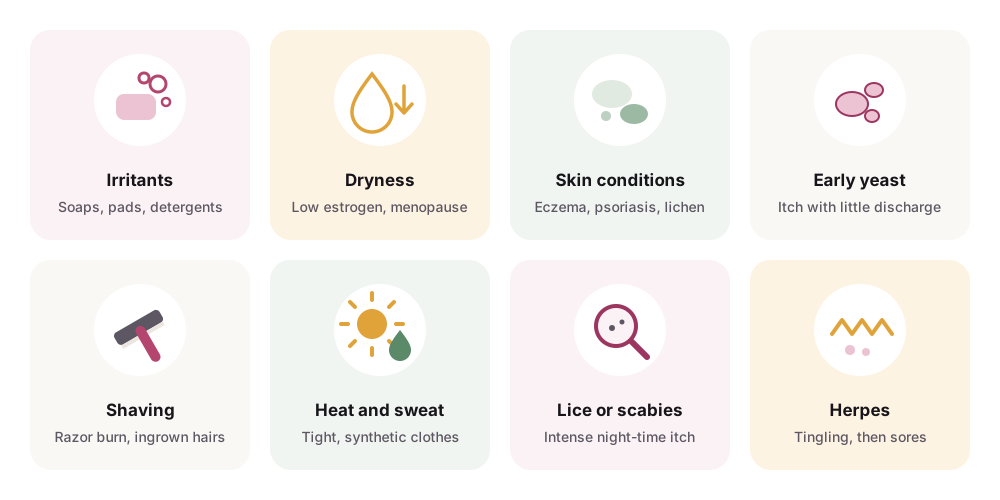
This is one of the most common causes. The skin reacts to something it touches, such as:
- Scented soaps, body washes, bubble baths or “intimate washes”
- Scented or plastic-backed pads and panty liners
- Laundry detergents and fabric softeners
- Wet wipes, talc, deodorant sprays or perfumes
- Spermicides, lubricants or latex condoms
- Hair-removal creams
The skin may look red, feel sore or burning, and itch more after contact.
2. Dry skin and low estrogen
Estrogen helps keep vulval and vaginal skin moist and elastic. When estrogen levels drop — during perimenopause and after menopause, while breastfeeding, or with some medicines — the skin can become thinner, drier and itchier. You may also notice discomfort during sex.
3. Eczema and psoriasis
Skin conditions that affect other parts of the body can affect the vulva too. Eczema can cause dry, itchy, thickened skin, often worsened by scratching. Psoriasis on the vulva may look like smooth, red patches rather than the scaly plaques seen elsewhere.
4. Lichen sclerosus
This is a long-term skin condition that is not infectious. It can cause intense itching (often worse at night), with white, shiny or crinkled patches of skin, easy bruising or small tears. It can affect people of any age but is more common after menopause. It needs a doctor’s diagnosis and treatment, and regular follow-up, because untreated it can change the shape of the vulva and is linked to a small increased risk of vulval cancer.
5. Early or mild yeast infection
A yeast (thrush, or candida) infection does not always cause the classic thick white discharge. In the early stages, it may cause itching, redness and soreness with very little discharge. It is more likely after antibiotics, in pregnancy, with poorly controlled diabetes, or in hot and humid weather.
6. Pubic lice or scabies
Tiny parasites can cause intense itching, particularly at night. With pubic lice, you may see tiny specks or eggs attached to pubic hair. Scabies often causes itching in other places too, like between the fingers or around the waist. Both are treatable, and close contacts usually need treatment as well.
7. Shaving, waxing and razor burn
Hair removal can cause razor burn, small red bumps and ingrown hairs, and the skin often itches as hair grows back. Blunt razors, dry shaving and shaving against the direction of hair growth make this more likely.
8. Sweat, heat and tight clothing
Synthetic underwear, tight jeans or leggings, and long hours sitting — especially in an Indian summer or monsoon — trap heat and moisture. This can cause chafing, heat rash and a general itchiness, and can also encourage fungal infections.
9. Genital herpes
Herpes may begin with tingling, burning or itching in one spot, followed a day or two later by small, painful blisters or sores. Some people also feel unwell with a fever or aches during the first outbreak. If you notice sores, see a doctor as soon as you can.
Symptom and possible cause guide
This table is only a starting point. Many conditions overlap, and only an examination can confirm the cause.
| What you notice | Possible cause |
|---|---|
| Redness and burning after a new soap, pad or detergent | Contact dermatitis |
| Dryness, thin skin, discomfort during sex, around menopause or breastfeeding | Low estrogen |
| Dry, thickened, itchy patches; eczema elsewhere on your body | Eczema |
| Smooth, red, well-defined patches | Psoriasis |
| White, shiny or crinkled patches; itch worse at night | Lichen sclerosus |
| Itching and redness, little discharge, after antibiotics | Early yeast infection |
| Intense night-time itching; specks in pubic hair | Pubic lice or scabies |
| Small red bumps after shaving or waxing | Razor burn or ingrown hairs |
| Itching and chafing in heat or tight clothes | Sweat and friction |
| Tingling or burning, followed by blisters or sores | Possible genital herpes |
Gentle self-care steps
If your itching is mild and you have no sores, lumps or skin colour changes, these steps often help within a few days:
- Wash with plain water only. Skip all soaps, washes and wipes on the vulva for a while.
- Pat dry gently with a soft towel — do not rub.
- Switch to cotton underwear and loose clothing; sleep without underwear if comfortable.
- Change out of damp clothes after exercise or swimming promptly.
- Use unscented pads, and consider changing brands if you itch during your period. Menstrual cups or period underwear suit some people better.
- Use fragrance-free detergent for underwear, and rinse it well.
- Try a plain emollient such as petroleum jelly or a fragrance-free barrier cream on the outer skin to protect and soothe it.
- Use a water-based or silicone-based lubricant during sex if dryness is a problem.
- Avoid scratching. Keep nails short, and a cool compress can ease the urge.
Tip: Try changing one thing at a time — your soap, your pads or your detergent. If the itching settles, you have probably found the trigger. Noting when the itch starts and how it relates to your period in a cycle tracker such as the Nitya Health app can reveal a pattern you might otherwise miss.
What not to do
- Don’t keep self-treating with antifungal creams or pessaries. If you have used them more than once or twice without lasting relief, the cause may not be yeast — and repeated use can itself irritate the skin.
- Don’t use steroid creams without medical advice. They can worsen fungal infections and, used wrongly, may thin the skin. A doctor may prescribe them for certain conditions, with clear instructions.
- Don’t douche or wash inside the vagina. It disturbs the natural balance and can make things worse.
- Don’t apply home remedies like neem paste, lemon, vinegar, toothpaste or undiluted oils to the vulva — they can burn or irritate delicate skin.
- Don’t feel embarrassed to ask for help. Itching is one of the most common reasons people see a gynaecologist.
How itching relates to your cycle
Some people notice they itch more at certain times of the month. Pads and the extra warmth during a period can irritate skin. Some find yeast infections tend to flare before a period. Your discharge also changes across the cycle — read more about how discharge changes throughout your cycle to understand what is normal for you.
When to see a doctor
See a gynaecologist, dermatologist or your family doctor if:
- Itching lasts more than a week despite self-care, or keeps coming back
- You notice white, shiny, thickened or discoloured patches of skin
- You have sores, blisters, ulcers, lumps or bleeding
- The skin is cracked, split or very painful
- You are post-menopausal and have new or persistent itching
- You see specks or tiny insects in pubic hair, or a partner also itches
- The itching comes with unusual discharge, a strong smell, pain when passing urine, or fever
- You are pregnant or have diabetes
- Antifungal treatment has not helped, or you have had more than a few yeast infections in a year
A doctor can examine the area, take a swab if needed, and recommend the right treatment. Itching is common, treatable and nothing to be ashamed of — and you do not have to put up with it.
Frequently asked questions
Can you have a yeast infection without discharge?
Yes. In the early stages, or in mild cases, a yeast infection may cause itching, redness and soreness with little or no discharge. Because other conditions look similar, it is worth getting a diagnosis before using antifungal treatment, especially if this is your first time.
Why does my vulva itch after my period?
Pads, especially scented ones, combined with heat, sweat and friction can irritate the skin during a period. Hormone changes around your cycle may also make the skin feel drier or more sensitive for a few days.
Can I use a steroid cream for vaginal itching?
Only on a doctor's advice. Steroid creams can help some skin conditions, but they can make fungal infections worse and may thin delicate vulval skin if used incorrectly or for too long.
Is vulval itching a sign of cancer?
Itching is very rarely caused by cancer and is usually due to something common such as irritation, dryness or infection. However, persistent itching with white patches, lumps, sores or skin changes should always be checked by a doctor.
- #vaginal itching
- #vulval health
- #intimate hygiene
- #skin care
- #yeast infection
Track it with Nitya Health
Log your cycle, symptoms and habits — and get answers from an AI health coach.