Period Cramps: 10 Home Remedies That Actually Help
What causes period cramps, 10 home remedies with an honest look at the evidence, from heat and exercise to ginger, and the warning signs to take seriously.
By Nitya Health Editorial Team8 min read
For many of us, period cramps are a monthly reality — anything from a dull ache in the lower belly to pain that radiates into the back and thighs and makes it hard to get through the day. In many Indian homes, the advice passed down is to “adjust” and carry on. But period pain is real, it has a clear biological cause, and there is a lot you can do about it.
Below are 10 home remedies, with an honest look at how well each one is supported. Some have good evidence, some have a little, and some simply feel comforting — which can matter too. Everyone is different, so you may need to try a few to find your own combination.
What causes period cramps?
During your period, the lining of the uterus releases chemicals called prostaglandins. These make the muscular wall of the uterus contract so it can shed its lining. Strong contractions can briefly squeeze the blood vessels supplying the uterus, reducing oxygen to the muscle — and that causes pain.
People with higher levels of prostaglandins tend to have stronger cramps. Prostaglandins can also cause other period symptoms, such as nausea, loose stools and headaches.
Primary vs secondary dysmenorrhoea
The medical term for painful periods is dysmenorrhoea. There are two types:
| Primary dysmenorrhoea | Secondary dysmenorrhoea | |
|---|---|---|
| Cause | Prostaglandins; no underlying condition | An underlying condition such as endometriosis, adenomyosis, fibroids or pelvic infection |
| When it starts | Usually within a few years of the first period | Often later in life, or pain that changes or worsens over time |
| Pain pattern | Starts just before or as bleeding begins; usually eases within 2–3 days | May start days before the period, last longer, or happen at other times of the month |
| Response to remedies | Often improves with heat, exercise and painkillers | May not respond well to usual remedies |
The remedies below are mostly for primary dysmenorrhoea. If your pain fits the secondary pattern, see a doctor.
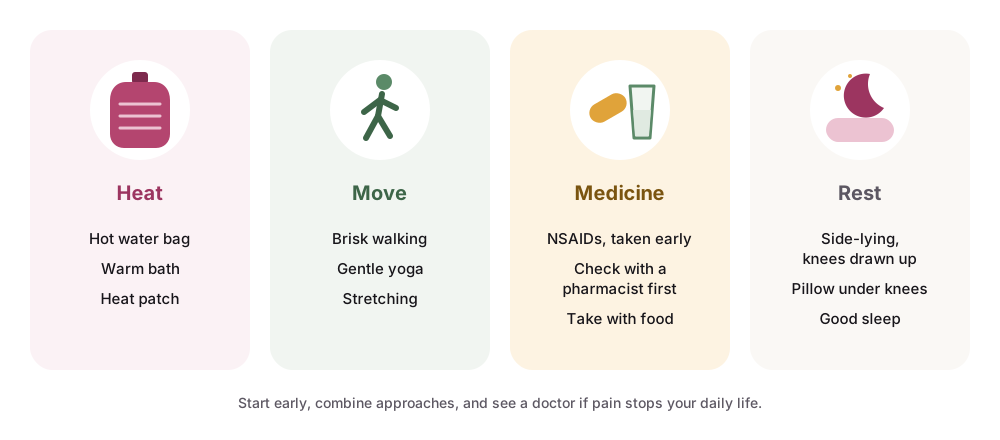
10 home remedies for period cramps
1. Heat — good evidence
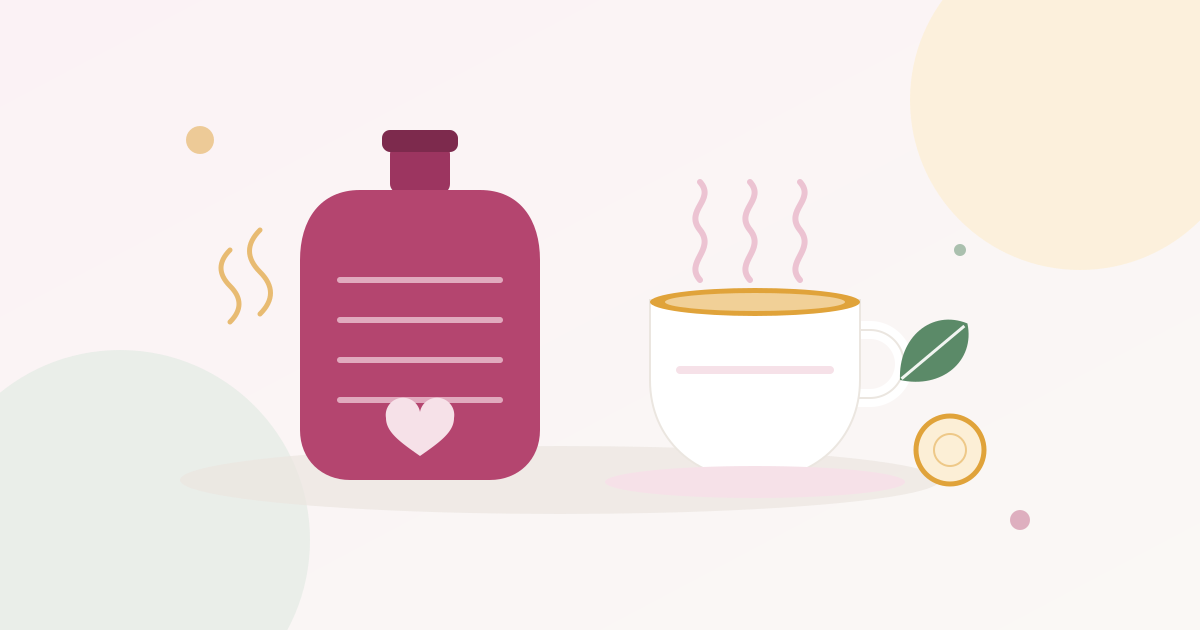
A hot water bag or heat patch on your lower belly or lower back is one of the best-supported home remedies. Heat helps relax the uterine muscles and improve blood flow, and studies have found it can work about as well as some over-the-counter painkillers for many people.
- Use comfortably warm, not scalding, water and wrap the bag in a cloth
- A warm bath or shower can help too
- Never sleep on an electric heating pad, and take care if you have reduced sensation in your skin
Tip: Start heat and other remedies at the first twinge rather than waiting for the pain to peak. Cramps are much easier to keep under control than to bring down once they are severe.
2. Exercise — good evidence
It might be the last thing you feel like doing, but regular exercise is linked with less period pain over time. Activity releases endorphins, the body’s natural painkillers, and improves blood flow to the pelvis. Brisk walking, cycling, swimming or dancing a few times a week all count. During your period, a gentle walk may be enough.
3. Anti-inflammatory painkillers (NSAIDs) — strong evidence
Non-steroidal anti-inflammatory drugs (NSAIDs) such as ibuprofen, naproxen and mefenamic acid work by lowering prostaglandin production, so they target the cause of the cramps. They tend to work best when taken early — at the start of bleeding or when you first feel pain — and taken with food.
Please check with a pharmacist or doctor before using them, because NSAIDs are not suitable for everyone. Be especially careful if you:
- Have asthma that worsens with painkillers, a stomach ulcer, acid reflux or a bleeding disorder
- Have kidney, liver or heart problems, or high blood pressure
- Are pregnant or trying to conceive
- Take blood thinners or other regular medicines
Always follow the dose on the label or your doctor’s advice, and do not combine two different NSAIDs.
4. Ginger — some evidence
Some small studies suggest that ginger, taken in the first few days of a period, may help reduce period pain. A cup of adrak chai or ginger tea — fresh ginger slices simmered in water with a little honey or lemon — is an easy, comforting way to try it. Check with your doctor before taking ginger supplements, particularly if you take blood thinners.
5. Stay hydrated
Dehydration can make bloating and discomfort feel worse. Drinking enough water and fluids such as coconut water, buttermilk or warm herbal drinks will not stop cramps on their own, but they can help you feel better overall.
6. Gentle yoga and stretching
Some studies suggest yoga can reduce period pain, though the research is still limited. Gentle poses many people find soothing include:
- Child’s pose (balasana) — kneel, sit back on your heels and fold forward
- Cat–cow — slowly round and arch your back on all fours
- Supine twist — lie on your back and let your knees fall to one side
- Butterfly pose (baddha konasana) — sit with the soles of your feet together
- Legs up the wall — lie with your legs resting up a wall
Move slowly and stop if anything hurts.
7. Massage
Gently massaging the lower belly in slow, circular movements — with or without a few drops of a carrier oil such as coconut oil — may ease tension. Some small studies suggest massage, including with aromatherapy oils, may help, though the evidence is limited. Even if the effect is modest, it can be relaxing.
8. Find a comfortable sleep position
Pain can make sleep difficult, and poor sleep can make pain feel worse. Many people find lying on their side with knees drawn up (the foetal position) or lying on their back with a pillow under the knees takes pressure off the abdomen and lower back.
9. Cut back on caffeine and salt
There is limited direct evidence, but many people find that reducing salty and processed foods eases bloating, and that cutting back on caffeine helps with breast tenderness and irritability around their period. Focusing on whole foods — dal, vegetables, fruit and whole grains — supports your overall health too. If your periods are heavy, our list of iron-rich vegetarian Indian foods can help you replace lost iron.
10. TENS machine — some evidence
A TENS (transcutaneous electrical nerve stimulation) machine is a small, battery-operated device that sends mild electrical pulses through sticky pads on the skin. It may help block pain signals, and some research suggests it can reduce period pain. TENS units are available to buy, but check the instructions and talk to your doctor if you have a pacemaker, epilepsy or are pregnant.
What about traditional Indian kitchen remedies?
Many of us grew up with remedies from our mothers and grandmothers. These are generally safe in normal food amounts and can be comforting, but it is fair to say the scientific evidence for them is limited.
- Ajwain (carom seed) water — boiling a teaspoon of ajwain in water is a traditional remedy for bloating and cramps. It may help with gas and indigestion, but there is little research on period pain specifically.
- Methi (fenugreek) seeds — soaked overnight or brewed as a tea. A few small studies have looked at fenugreek for period pain, but the evidence is not strong.
- Haldi doodh (turmeric milk) — turmeric contains curcumin, which has anti-inflammatory properties in laboratory studies. A warm glass at bedtime is soothing, though it is not a proven treatment for cramps.
- Jeera (cumin) or saunf (fennel) water — often used for digestion and bloating; fennel has a little early research behind it for period pain.
Feel free to enjoy these alongside proven remedies like heat and exercise — just avoid large concentrated doses, and check with your doctor if you are pregnant, breastfeeding or take regular medicines.
Track your pain to spot patterns
Noting when your cramps start, how severe they are and what helped can be surprisingly useful. Logging symptoms in an app like Nitya Health over a few cycles shows whether your pain is stable, getting better or getting worse — valuable information if you decide to see a doctor. Understanding the phases of your menstrual cycle can also help you prepare before your period starts.
Red flags: when cramps may be a sign of something more
Period pain should not be dismissed as “just part of being a woman”. Some symptoms may suggest an underlying condition, such as:
- Endometriosis — tissue similar to the uterine lining grows outside the uterus. It may cause severe period pain, pain during or after sex, painful bowel movements or urination during periods, and difficulty getting pregnant.
- Fibroids — non-cancerous growths in the uterus that can cause heavy or prolonged bleeding, pelvic pressure and cramps.
- Adenomyosis — the lining grows into the muscle wall of the uterus, which may cause heavy, painful periods.
- Pelvic inflammatory disease (PID) — an infection of the reproductive organs that can cause pelvic pain, fever, unusual discharge and pain during sex.
When to see a doctor
See a gynaecologist if:
- Your pain is severe enough to make you miss school, college or work, or does not improve with painkillers
- Your periods have become more painful over time, or pain started after years of easy periods
- You have pain between periods, during or after sex, or when passing urine or stools
- You have very heavy bleeding — soaking a pad every hour or two, or passing large clots
- You have fever, unusual discharge or a bad smell along with pelvic pain
- You have irregular periods or bleeding between periods
- You have a copper IUD and your cramps have worsened
- You could be pregnant and have sudden or one-sided pain
Seek urgent care for sudden, severe abdominal pain, fainting or pain with a high fever. Painful periods are common, but they are also treatable — and you deserve proper relief.
Frequently asked questions
What is the fastest way to relieve period cramps?
For many people, a combination of heat on the lower belly and an anti-inflammatory painkiller such as ibuprofen, taken at the first sign of pain, works best. Check with a pharmacist or doctor that painkillers are safe for you first.
Does drinking hot water help period cramps?
Warm drinks can feel soothing and staying hydrated may ease bloating, but there is little direct evidence that hot water itself relieves cramps. Applying heat to the abdomen with a hot water bag has much better support.
Is it normal for period cramps to be very painful?
Mild to moderate cramping is common, but pain that stops you going to school or work, or does not improve with painkillers, is not something you have to put up with. It is worth seeing a gynaecologist to rule out conditions such as endometriosis.
Can exercise help period cramps?
Yes. Regular physical activity, such as walking, cycling or yoga, has been linked with less period pain over time. Gentle movement during your period may also help some people feel better.
- #period cramps
- #period pain
- #dysmenorrhoea
- #home remedies
- #menstrual health
Track it with Nitya Health
Log your cycle, symptoms and habits — and get answers from an AI health coach.