Mosambi (Sweet Lime) Juice: Benefits and Recipes
Mosambi (sweet lime) juice nutrition, honest health benefits, juice vs whole fruit, how to make it fresh at home, three easy recipes and who should be careful.
By Nitya Health Editorial Team8 min read

Mosambi (mausambi), also called sweet lime, is a familiar sight at Indian fruit stalls and juice counters. Its juice is mild, gently sweet and less sour than orange, which is why it is often the first drink offered to someone recovering from fever or feeling weak in the summer heat.
But how healthy is mosambi juice really? Below, we look at its nutrition, the benefits that hold up, how juice compares with eating the whole fruit, and how to make it fresh at home — plus three simple recipes.
Mosambi nutrition at a glance
Mosambi (Citrus limetta) is a low-calorie citrus fruit that is mostly water. Its standout nutrient is vitamin C.
| Nutrient | Per 100 g edible fruit (approx.) |
|---|---|
| Energy | 43 kcal |
| Carbohydrates | 9 g |
| Protein | 0.8 g |
| Fat | 0.3 g |
| Vitamin C | 50 mg |
| Calcium | 40 mg |
| Iron | 0.7 mg |
| Water | About 88 g |
Values are approx., based on standard Indian food composition data. Exact amounts vary with variety, ripeness and storage.
A fresh 200 ml glass of juice, made from roughly three medium mosambis, provides about 85–90 kcal. Its vitamin C content varies a lot depending on how fresh the juice is, but a fresh glass can supply a large part of an adult woman’s daily need, which is around 65 mg according to Indian dietary guidelines.
Health benefits of mosambi juice
Mosambi juice is a pleasant, nourishing drink. Some of the claims you see online are exaggerated, so here is what is reasonable to expect.
1. A good source of vitamin C
Vitamin C supports the immune system, helps your body make collagen for skin and wound healing, and acts as an antioxidant. It also improves the absorption of iron from plant foods. Drinking mosambi juice with an iron-rich vegetarian meal — such as poha with peanuts, palak dal or rajma — can help you absorb more iron. This is especially useful for women, many of whom have low haemoglobin. Our guide to iron-rich vegetarian foods explains more.
2. Hydration
Mosambi juice is mostly water with some natural sugar and potassium. In hot weather, or when you have lost fluids through mild illness, it can help you stay hydrated and is more appealing than plain water for many people. It is not a replacement for oral rehydration solution (ORS) when you have diarrhoea or vomiting.
3. Gentle on the stomach for many people
Because it is less acidic in taste than lemon or orange, mosambi juice is often well tolerated during recovery from fever or when appetite is low. This is why it is a common drink in Indian homes and hospitals during convalescence. It does not “cure” jaundice or liver problems, despite popular belief, but it can be a light, hydrating option when a doctor allows normal fluids.
4. Digestion
The whole fruit, eaten with its pulp and membranes, provides some fibre that supports regular bowel movements. Strained juice has very little fibre, so its effect on digestion is mostly through fluid intake.
5. Antioxidants
Citrus fruits contain flavonoids such as hesperidin, which have antioxidant properties. Research on these compounds is ongoing, and the amounts in a glass of juice are modest, so it is best to think of mosambi as part of an overall fruit-and-vegetable-rich diet rather than a targeted remedy.
Juice vs whole fruit: which is better?
Both are nutritious, but they are not equal.
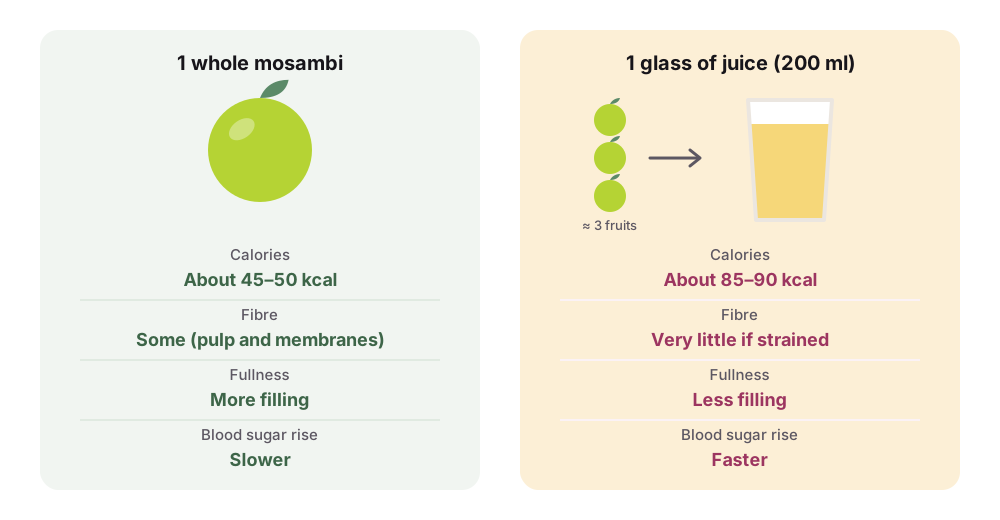
| Whole mosambi (1 medium) | Mosambi juice (200 ml) | |
|---|---|---|
| Fruits used | 1 | About 3 |
| Calories | About 45–50 kcal | About 85–90 kcal |
| Fibre | Some, from pulp and membranes | Very little, especially if strained |
| Fullness | Takes time to peel and eat; filling | Quick to drink; less filling |
| Effect on blood sugar | Slower rise | Faster rise |
Whole fruit wins for everyday eating, especially if you are watching your weight or blood sugar. Juice is useful when you need fluids, have a poor appetite, or simply want a refreshing drink — just keep it to a small glass and skip added sugar.
Key tip: If you make juice, don’t strain out all the pulp, and never add sugar. A pinch of black salt (kala namak) and roasted jeera brings out the flavour without extra calories.
How to make fresh mosambi juice at home
Fresh juice at home is safer and usually more nutritious than juice from a roadside stall, where fruit may be unwashed and ice may be made from unsafe water.
- Choose good fruit. Pick mosambis that feel heavy for their size, with smooth, thin, slightly glossy skin. Light, dry-looking fruit usually has less juice.
- Wash well. Rinse under running water before cutting, since the knife can carry dirt from the peel into the fruit.
- Cut and juice. Halve the fruit across the middle and use a hand-press citrus juicer or an electric juicer. Avoid squeezing the white pith and peel too hard, which makes the juice bitter.
- Keep the pulp. Strain only to remove seeds.
- Drink it fresh. Vitamin C breaks down with exposure to air, light and heat. Drink the juice within about 15–20 minutes, or refrigerate it in a closed bottle and drink it the same day.
Mosambi juice can turn bitter if left standing because of natural compounds in the fruit, which is another reason to drink it soon after making it.
Three easy mosambi juice recipes
1. Classic mosambi juice with black salt
Serves 1
- 3 medium mosambis
- A pinch of black salt (kala namak)
- A pinch of roasted cumin (jeera) powder
- A few ice cubes made from filtered water (optional)
Juice the mosambis, stir in the black salt and jeera powder, and serve immediately. The salt balances any bitterness and makes it refreshing on a hot day.
2. Mosambi-mint cooler
Serves 2
- 4 medium mosambis
- 8–10 fresh mint (pudina) leaves
- ½ teaspoon lemon juice
- A pinch of black salt
- 200 ml chilled water or plain soda
Lightly crush the mint leaves in a jug. Add the mosambi juice, lemon juice and black salt, then top up with chilled water or soda. Stir and serve. Diluting the juice this way gives you a larger, more refreshing drink with fewer calories per glass.
3. Mosambi-ginger juice
Serves 1
- 3 medium mosambis
- A 1 cm piece of fresh ginger (adrak), grated
- A pinch of black pepper (kali mirch)
- A few drops of honey only if needed (skip for diabetes)
Squeeze the grated ginger through a small strainer to get its juice. Add it to the fresh mosambi juice with black pepper and stir. Ginger adds warmth and a gentle kick, and many people find it soothing when they feel a little nauseous.
Mosambi juice during periods and pregnancy
During your period
There is no special “period food”, but staying hydrated can help with bloating and fatigue, and vitamin C helps you absorb iron from the foods you eat to replace what you lose in menstrual blood. A glass of mosambi juice with an iron-rich meal is a sensible choice. If you are noting how foods and drinks affect your cramps, bloating or energy, the Nitya Health app lets you log these alongside your cycle. For more ideas, see our article on period cramp home remedies.
During pregnancy
Fresh, hygienically prepared mosambi juice is generally considered safe in moderate amounts during pregnancy. It can help with hydration and vitamin C intake, and some women find its mild taste easier to tolerate during morning sickness. Make sure the fruit is washed and the juice is made fresh. If you have gestational diabetes, choose the whole fruit in measured portions instead of juice, and follow your doctor’s or dietitian’s advice.
Side effects and who should be careful
Mosambi is safe for most people. Keep these points in mind:
- Acidity and reflux: Although it tastes mild, mosambi is still a citrus fruit. Some people with acid reflux or gastritis get heartburn from citrus juices, especially on an empty stomach. Try it after a meal, or choose another fruit.
- Diabetes and blood sugar: Juice lacks fibre and is quick to drink, so it raises blood sugar faster than the whole fruit. People with diabetes or prediabetes are usually better off eating a whole mosambi.
- Weight management: Calories from juice add up easily without making you feel full. Limit juice to one small glass a day if you are trying to lose weight.
- Tooth enamel: Frequent sipping of any acidic drink can wear enamel over time. Drink it in one go rather than sipping all day, and rinse your mouth with water afterwards.
- Medicine interactions: The well-known food–drug interactions with citrus are mainly with grapefruit (and some related fruits like Seville orange and pomelo), which can affect how certain medicines are processed. Sweet lime is not commonly listed as a major concern. If you take regular medication, especially for blood pressure, heart rhythm or cholesterol, it is still reasonable to ask your doctor or pharmacist.
- Kidney disease: Citrus fruits contain potassium. If you have chronic kidney disease and are on a potassium-restricted diet, check with your doctor or dietitian how much fruit juice you can have.
- Allergy: Citrus allergy is uncommon but possible. Stop and seek medical help if you notice itching, swelling or breathing difficulty.
Mosambi juice is a refreshing, vitamin C-rich drink that fits easily into an Indian diet. Enjoy it fresh, without added sugar, and remember that the whole fruit is usually the better everyday choice.
Frequently asked questions
Is it good to drink mosambi juice every day?
A small glass of fresh, unsweetened mosambi juice a day is fine for most healthy adults. Eating the whole fruit more often is even better, because it keeps the fibre and is more filling.
Is mosambi juice good for acidity?
Mosambi tastes less sour than lemon or orange, so many people tolerate it well. However, it is still a citrus fruit, and some people with acid reflux find it worsens heartburn, especially on an empty stomach.
Can people with diabetes drink mosambi juice?
Fruit juice raises blood sugar faster than whole fruit because the fibre is removed. People with diabetes are usually advised to eat the whole fruit in a measured portion instead and to check with their doctor or dietitian.
Can I drink mosambi juice during pregnancy?
Fresh, hygienically prepared mosambi juice is generally considered safe in pregnancy in moderate amounts. Avoid roadside juice made with unwashed fruit or unsafe ice, and limit portions if you have gestational diabetes.
- #mosambi
- #sweet lime
- #fruit juice
- #vitamin c
- #summer drinks
Track it with Nitya Health
Log your cycle, symptoms and habits — and get answers from an AI health coach.